
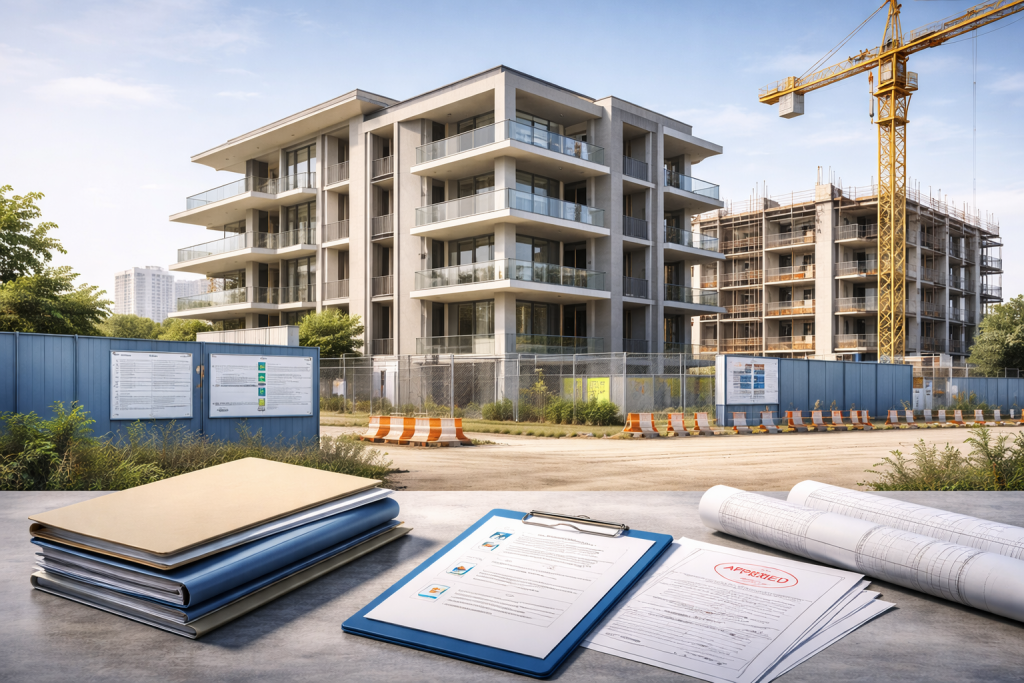
Planning Guidelines Every Residential Project Must Follow
Residential projects today are no longer judged only by location or elevation. Buyers, authorities, and developers now evaluate projects based on how well they are planned, regulated, and executed. A strong planning foundation ensures smoother approvals, efficient construction, better livability, and long-term value.
Ignoring planning fundamentals often leads to redesigns, approval delays, cost overruns, and compromised living quality. That is why following planning guidelines for residential projects is critical right from the conceptual stage.
At Shree Om Consultant (SOC), planning is treated as a strategic process that balances regulations, site potential, user comfort, and future sustainability. This blog explains the essential planning principles every residential project must follow to ensure success at every stage.
Why Planning Guidelines Are Crucial in Residential Development
Planning guidelines act as a roadmap for a project. They help align architectural intent with regulatory requirements, structural feasibility, and user expectations. When planning is weak, even well-designed buildings struggle during execution or post-occupancy.
Authorities closely examine compliance-related aspects, while buyers focus on comfort, safety, and functionality. Following residential project planning standards helps developers reduce risk, improve approval timelines, and deliver homes that perform well over time.
Good planning also improves coordination between architects, engineers, contractors, and consultants, preventing conflicts later during construction.
Site Analysis: The First Step in Smart Planning
Every residential project must begin with a detailed site analysis. Understanding site dimensions, orientation, access roads, surrounding developments, and environmental conditions sets the foundation for effective planning.
Factors such as sun path, prevailing wind direction, and natural drainage significantly influence layout decisions. Ignoring these aspects often results in poorly ventilated homes, higher energy consumption, and uncomfortable living spaces.
A strong site study supports smart residential layout planning, ensuring optimal use of land while respecting local regulations and environmental context.
Regulatory Compliance and Development Controls
One of the most critical planning aspects is adherence to local development regulations. Residential projects must comply with zoning norms, land-use permissions, and authority-specific guidelines.
Key parameters such as permissible height, built-up area, margins, and parking norms directly influence planning decisions. Understanding residential building regulations in India helps avoid revisions, penalties, and approval delays.
Rather than treating regulations as limitations, experienced consultants use them as planning tools to maximize potential while remaining compliant.
FSI, Density, and Built-Up Area Optimization
Efficient use of Floor Space Index (FSI) is a defining factor in residential planning. Poor FSI utilization can lead to wasted space, reduced project viability, or compromised open areas.
Balanced planning ensures that density does not come at the cost of comfort. Proper spacing between buildings, adequate light and ventilation, and usable open areas enhance the living experience.
Effective FSI planning for residential buildings improves both project economics and long-term desirability.
Internal Layout Planning and Space Efficiency
Layouts define how residents experience their homes daily. Well-planned homes prioritize usability over mere size.
Living spaces should allow flexible furniture placement, bedrooms must ensure privacy, and kitchens should support efficient movement. Circulation areas should be purposeful, not wasted.
Good residential layout planning focuses on functionality, comfort, and adaptability, ensuring homes remain relevant even as lifestyle needs change.
Light, Ventilation, and Orientation
Natural light and ventilation are essential components of residential comfort. Planning guidelines emphasize proper orientation and opening placement to reduce dependence on artificial lighting and mechanical ventilation.
Cross-ventilation improves indoor air quality, while well-planned window placement enhances daylight penetration without excessive heat gain.
Following natural ventilation planning guidelines results in healthier, energy-efficient homes that are more comfortable throughout the year.
Parking, Access, and Movement Planning
Parking is no longer an afterthought in residential projects. Proper planning ensures smooth vehicular movement without disrupting pedestrian safety.
Entry and exit points must be clearly defined, internal driveways should be obstruction-free, and parking layouts should allow easy maneuverability. Poor parking planning often leads to congestion and long-term operational issues.
Well-structured access planning supports both convenience and safety for residents.
Amenities and Open Space Planning
Amenities add value only when they are thoughtfully planned. Merely allocating space is not enough usability and accessibility matter.
Open spaces, play areas, and community zones should be integrated into the overall layout rather than treated as leftover spaces. These elements improve social interaction and quality of life.
Strong open space planning in residential projects enhances project appeal while maintaining regulatory compliance.
Service Planning and Infrastructure Coordination
Residential planning must account for essential services such as water supply, drainage, electrical systems, fire safety, and waste management.
Service shafts, utility zones, and maintenance access points should be planned early to avoid conflicts during construction. Poor coordination often leads to redesigns, service inefficiencies, and higher maintenance costs.
Integrated service planning ensures smooth execution and long-term operational efficiency.
Future Readiness and Adaptability
Residential projects should not only meet current needs but also adapt to future requirements. Planning should allow flexibility for evolving family structures, technological upgrades, and regulatory changes.
Provisions for future services, adaptable layouts, and scalable infrastructure improve the lifespan of a project.
Following residential planning best practices helps developers create projects that remain relevant for decades.
Role of Professional Consultants in Residential Planning
Residential planning involves multiple variables technical, regulatory, financial, and experiential. Managing all these aspects requires professional expertise.
At Shree Om Consultant (SOC), planning is approached holistically. From feasibility studies and compliance checks to layout optimization and execution support, professional guidance ensures informed decision-making.
An experienced architectural consultant for residential projects helps developers avoid costly mistakes and achieve clarity at every stage.
Conclusion
Residential success begins with disciplined planning. Projects that follow defined planning guidelines for residential projects achieve smoother approvals, better execution, and higher resident satisfaction.
From site analysis and regulatory compliance to layout efficiency and future readiness, every planning decision shapes the outcome. Thoughtful planning reduces risk, improves value, and ensures long-term performance.
At Shree Om Consultant (SOC), we believe that strong planning is not about restrictions it is about creating residential spaces that are compliant, comfortable, and built to last.
0 comments